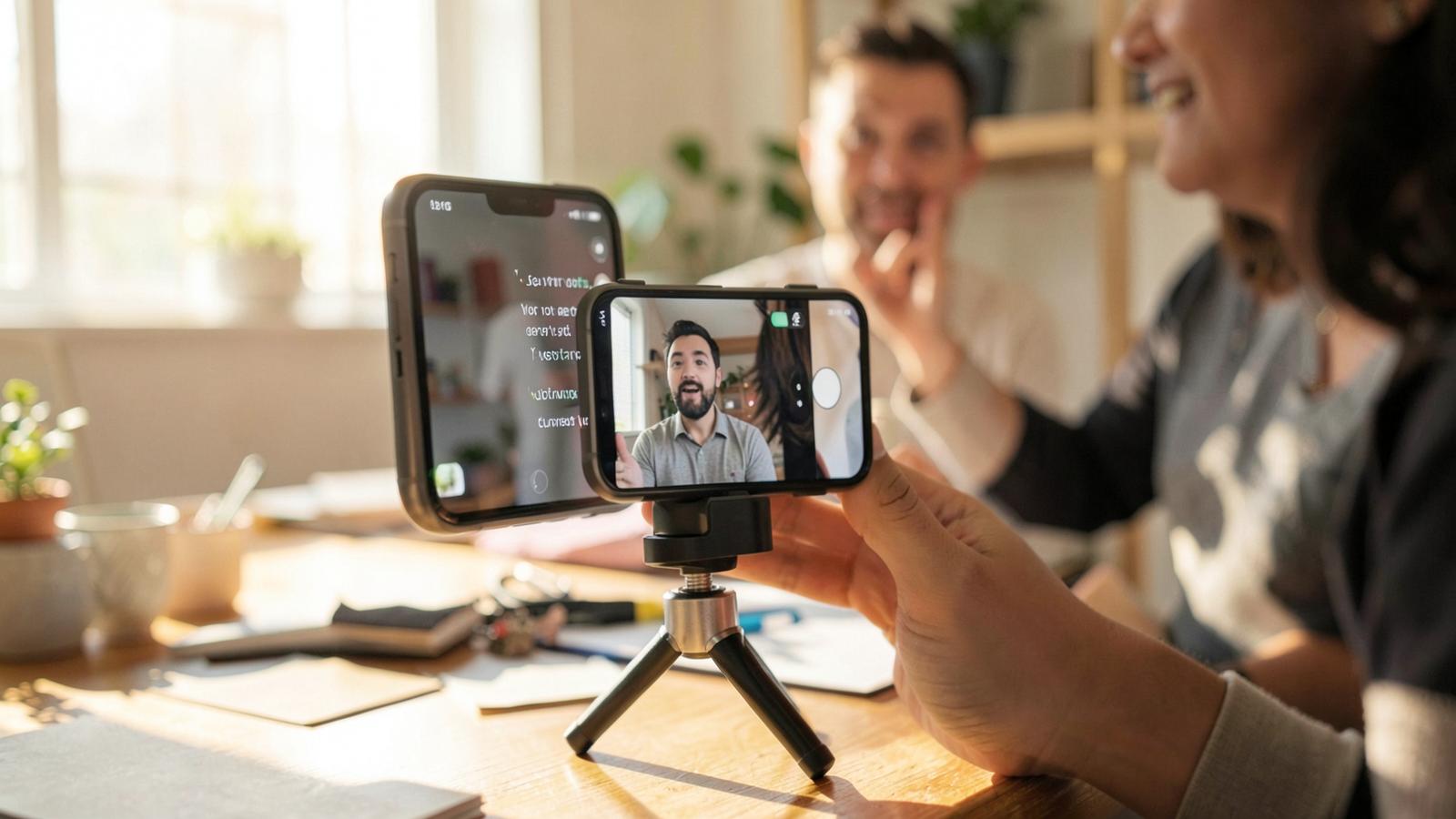
Phone Teleprompter: How to Nail Video in One Take
A practical workflow for recording with a mobile teleprompter: writing for the ear, dialing in speed, camera placement, and killing the read-aloud voice.
<h2>Why the first take usually fails</h2>
Almost always for one reason: the script lives away from the shoot. You keep it in your head, a notebook, or a second screen, and your brain spends its energy on recall instead of delivery. A phone teleprompter removes the conflict — the text sits exactly where you are already looking.
<h2>Step 1. Write for the ear</h2>
Use short sentences and break paragraphs into meaning-sized lines so the eye grabs a whole phrase. Cut formal constructions: what reads fine on paper sounds heavy aloud. Mark pauses with blank lines and highlight key words as anchors.
<h2>Step 2. Dial in speed and type size</h2>
Read the first paragraph out loud and adjust the speed until you are neither chasing nor waiting for the text. Increase the font until you stop squinting at your working distance — bigger type means less eye movement and a more natural gaze.
<h2>Step 3. Place the camera</h2>
Phone at eye level, text as close to the lens line as possible. If the script overlays the frame, keep the reading block at the top of the screen next to the front camera. Sixty to a hundred centimetres gives a flattering framing and easy reading.
<h2>Step 4. Kill the read-aloud voice</h2>
<ul><li>Say the script once without recording so the prompter becomes a hint, not a leash.</li><li>Pause at the end of thoughts, not at the end of lines.</li><li>Use your hands and vary intonation — gesture pulls out real speech.</li><li>Allow yourself to go off script; the prompter will wait.</li></ul>
<h2>Step 5. Record in blocks</h2>
Do not attempt an eight-minute monologue in one piece. Split the script into 30–60 second blocks with a short pause between them. Those blocks cut together invisibly, and the number of retakes drops dramatically.
<h2>Bottom line</h2>
A mobile prompter saves less time than it saves nerves: you stop worrying about forgetting a phrase and start thinking about the viewer. A script written for the ear, the right speed, and a camera at eye level are enough to finish most shoots in one take.