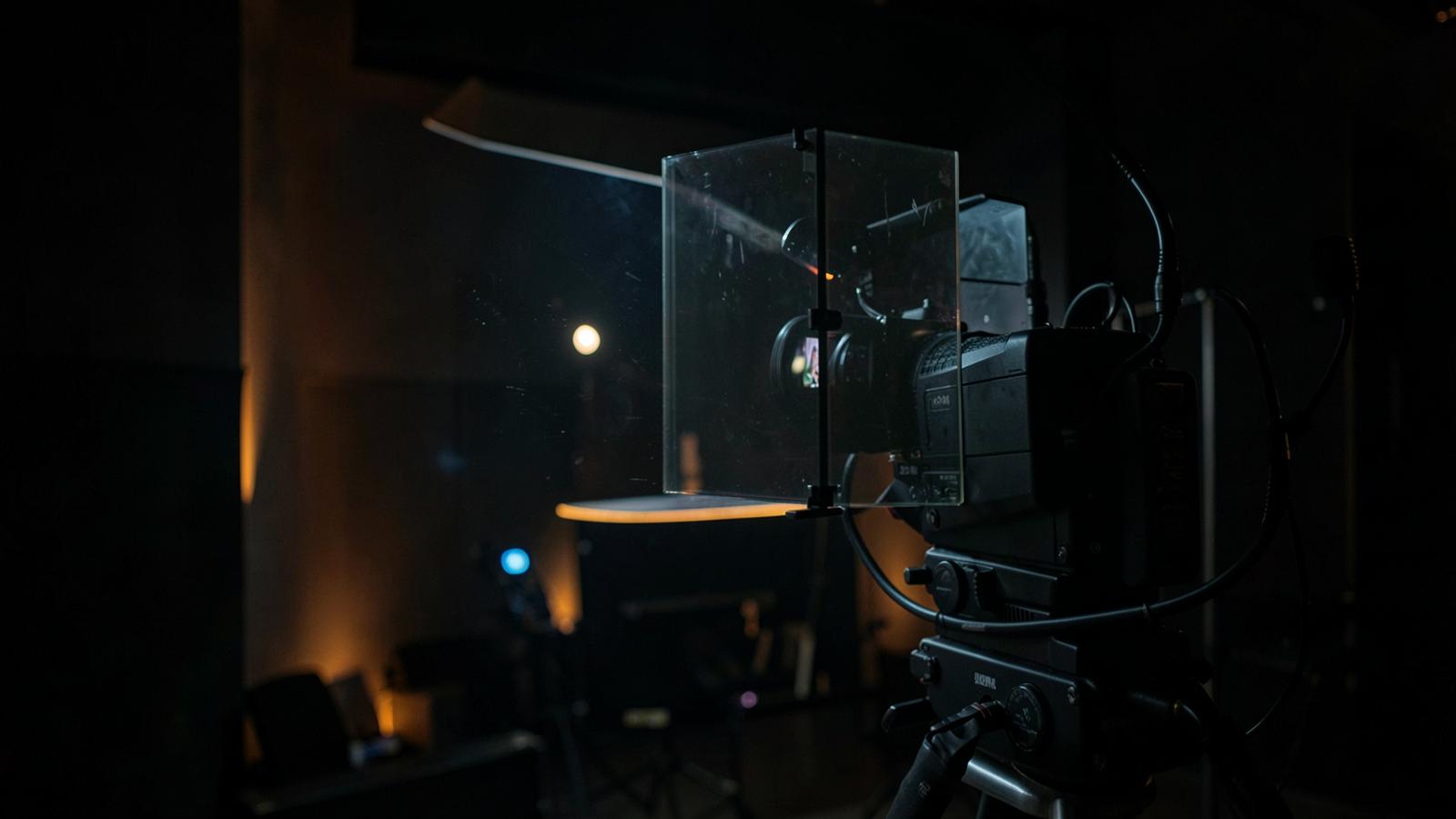
What an electronic teleprompter is
An electronic teleprompter shows your script right next to the lens and scrolls it at reading speed. You read, but your eyes stay on the camera — the viewer sees steady eye contact instead of someone glancing down at notes every few seconds.
How the hardware works
A studio rig has three parts: a screen (tablet or monitor), a beam-splitter glass at 45 degrees, and a light-proof hood. The screen faces up, the glass reflects the text toward the speaker while letting light through to the lens. The camera never sees the words.
A mobile teleprompter solves the same problem without optics: the phone sits at the lens line and the script scrolls over the frame. No mirror, no hood — just the right font size and speed.
App versus rig
- Cost. A mirror rig starts in the hundreds; an app costs the price of a coffee, or nothing.
- Mobility. A phone prompter travels in your pocket and works in a café, a car, or on the street.
- Setup time. Paste the text and record. Assembling a rig takes minutes.
- Eye line. A beam splitter gives a perfect on-axis gaze; with a phone, keep the text as close to the lens line as possible.
The settings that actually matter
Scroll speed must be adjustable while you read — a comfortable pace is 100–150 words per minute, but it shifts sentence to sentence. Font size follows distance: the further you sit, the larger the type and the shorter the lines. Mirror mode matters only with beam-splitter glass. And controls matter most: pause, rewind, and start without reaching into the frame.
Who uses one
Teleprompters are no longer a broadcast tool. Creators on YouTube and Reels, teachers recording courses, founders shooting pitches, lawyers and doctors explaining complex topics — anyone tired of re-recording the same take ten times.
Bottom line
A teleprompter does not make speech robotic; it removes the fear of forgetting a line so you can focus on delivery. Start with an app on your phone — if you end up reading from a prompter daily, the hardware will still be there.